
Before starting child CPR: danger, response, send for help

Danger
Check around you for danger. Remove the child and yourself from any danger.

Response
Check the child for a response. Ask them to open their eyes or squeeze your hand. Gently squeeze their shoulders.

Send for help
If the child isn’t responding or is breathing abnormally, call 000 for an ambulance.
How to start CPR on a child: check airway, breathing and colour
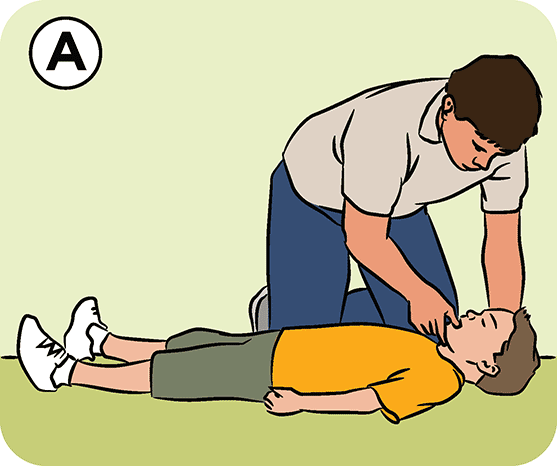
Airway
Check the child’s mouth for airway blockages like food, vomit or blood. If there’s a blockage, roll the child into the recovery position. Open the child’s mouth, clear blockages with your fingers, and then roll the child onto their back again. Tilt the child’s head back and lift the chin to open their airway.

Breathing and colour
If there are no blockages or you’ve cleared blockages, check for breathing. Look for chest movements, listen for breathing sounds from the nose or mouth, or feel for the child’s breath on your cheek.
Also check whether the child looks blue or discoloured.

Breathing?
Gently roll the child into the recovery position – on their side with top leg bent. Regularly check for breathing until the ambulance arrives.
Not breathing? Blue or discoloured?
Start CPR.
How to do child CPR: chest compression and breaths

Child CPR
Put the child on a firm surface on their back. Put the heels of your hands in the centre of the child’s chest. Interlock your fingers. With straight arms, do 30 compressions – 2 per second. Each compression should push the chest down by one-third. For small kids, you might need only one hand to push the chest down this far.
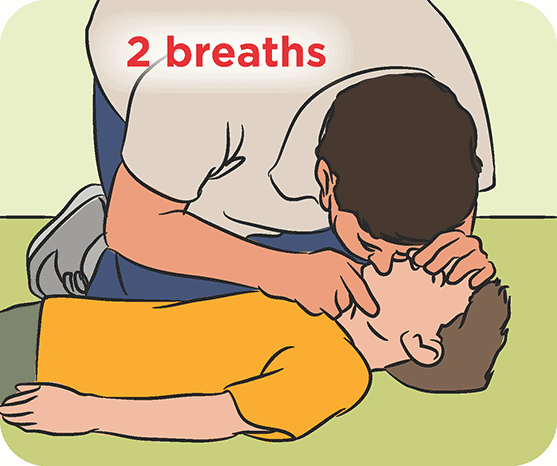
After 30 compressions, tilt the child’s head back and lift their chin to open their airway. Take a deep breath, seal your mouth over the child’s mouth, and pinch the soft part of their nose. Blow steadily for one second, and watch for the chest to rise. Watch, listen or feel for air leaving the chest. Take another breath, and blow into the child’s mouth again. If the chest doesn’t rise and fall, quickly check again for blockages.

Keep giving 30 compressions followed by 2 breaths until medical help arrives.
If the child starts breathing and responding, turn the child into the recovery position. Keep watching their breathing. If medical help doesn’t arrive within 5 minutes and you can’t contact the ambulance, get the child to a doctor.
Be ready to start CPR again at any time.