
You at 15 weeks pregnant: physical changes and symptoms
Blood and circulation
Your body is circulating more blood than usual. Your heart is working harder. This might give you a pregnancy ‘glow’, along with a few side effects:
- higher or lower blood pressure
- nose and gum bleeds
- mild headaches.
Headaches
If you’re experiencing severe headaches or you have a headache that won’t go away, see your doctor or midwife.
Hair and nails
Your hair might also be getting thicker, and your nails could be growing faster.
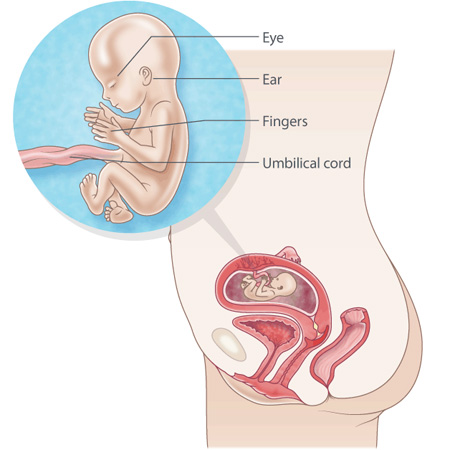
Your baby when you’re 15 weeks pregnant
How big is your baby at 15 weeks of pregnancy?
Your baby weighs about 80 g and measures 9.5 cm from head to bottom. They’re putting on weight rapidly.
What’s happening with your baby’s development at 15 weeks of pregnancy?
- Your baby’s body is now growing faster than their head.
- Your baby might suck their thumb.
- A fine covering of hair – called lanugo – is starting to cover your baby’s body.
What is an amniocentesis and why would you need one?
An amniocentesis is an antenatal diagnostic test.
An amniocentesis is used to detect chromosomal anomalies like Down syndrome. Your doctor or midwife might recommend an amniocentesis at around 15 weeks if a screening test earlier in pregnancy showed that your baby has an increased chance of a chromosomal anomaly.
In an amniocentesis, a doctor passes a thin needle through your stomach and into your uterus. The needle collects a small sample of the fluid surrounding your baby. The needle doesn’t touch your baby or the placenta.
Things to think about at 15 weeks: strong feelings about family
It’s common to think about your own parents, the part they played in your life when you were younger, and the way you might be as a parent. If your family lives far away or someone important to you is no longer alive, you can often feel their absence more strongly when you’re pregnant.
Pregnancy can bring families closer. You might want to spend more time with your family. Often this is about sharing the joy of being pregnant or the anticipation of a new baby in the family.
Some people choose not to have their families in their lives. You might become very aware of your feelings about difficult past experiences, and pregnancy could bring up strong or painful thoughts and reactions.
If this sounds like you, it’s a good idea to talk with someone you trust or get professional help. You could talk to your doctor or midwife or call Lifeline on 131 114. Many hospitals also have mental health workers who can give support and counselling.