
You at 7 weeks pregnant
Your skin
At this stage, you might have glowing skin.
Or you might experience skin problems, like pimples. There’s not much you can do about this, except cleanse your face regularly, use as little make-up as possible, eat healthy foods, and drink plenty of water.
Your breasts
Your breasts might be tender, and your nipples might be darker and stick out more. The skin around your nipples might be darker and more bumpy.
Your breasts might also be noticeably bigger. If so, you might need a maternity bra or at least a bigger bra. It’s a good idea to be properly fitted.
Your bowels
A common health problem around now is constipation. To help with this, you can increase your dietary fibre by eating more fruit, vegetables, wholegrains and other high-fibre foods. Drinking a lot of water helps with this problem too.
Your energy levels
Your life might still feel the same even though you have this amazing thing happening inside you.
For example, you might feel full of energy and keep doing your usual things – for example, working, playing sport, going for walks and catching up with people. But it’s also common to feel unusually tired and need more sleep than usual. Rest as much as you can, and try to get to bed earlier at night. You might not want to go out as much as you used to.
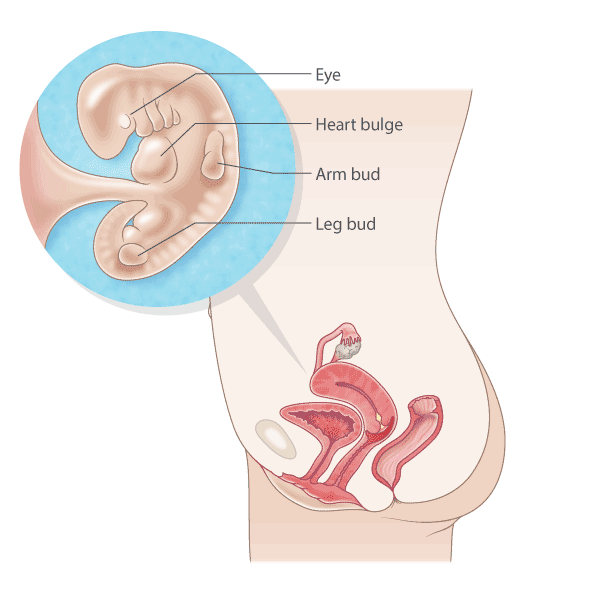
Your baby when you’re 7 weeks pregnant
Amazing things are happening with your baby, called an embryo.
How big is your baby at 7 weeks of pregnancy?
The embryo is about 1 cm long – about the size of a coffee bean.
What does your baby look like at 7 weeks of pregnancy?
- Body parts are usually out of proportion at this stage.
- The face is forming around the mouth. The embryo has large eyes, ear buds and a wide forehead. Inside the head cavity, the brain is developing.
- Hands are starting to develop at the ends of the arm buds.
- Internal organs are taking shape, including the stomach, kidneys, bowel and lungs.
- The developing heart is beating at 150-180 beats per minute.