
You at 11 weeks pregnant: symptoms and how to handle them
Morning sickness
You might find that morning sickness starts to settle after this point in pregnancy.
Leg or foot cramps
Leg or foot cramps are common.
Getting plenty of calcium can help. You can do this by eating calcium-rich foods like low-fat milk, yoghurt, hard cheeses and fortified soy drinks. If you have special dietary needs, seeing a dietitian might be a good idea.
Staying active can also help.
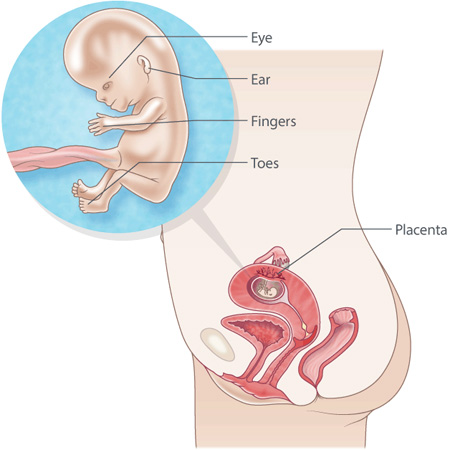
Your baby at 11 weeks of pregnancy
How big is your baby at 11 weeks of pregnancy?
Your baby measures about 4.5 cm from head to bottom and weighs about 10 g.
Your baby is about to have a growth spurt!
What does your baby look like at 11 weeks of pregnancy?
- The heart is completely formed and pumping.
- Fingers are growing nails.
- The brain and nervous system are almost finished developing.
- Nerves and muscles are starting to work together.
- Your baby is starting to make small, jerky movements. It’s too early for you to feel them, though.
Ultrasound at 11-13 weeks: what to expect
You can have an ultrasound scan at 11-13 weeks of pregnancy to check your baby’s development. It will also show if you’re having more than one baby. It can be really exciting – it’s often when you get to see your baby for the first time.
Usually this ultrasound scan is also part of a screening procedure that checks your baby’s chance of having a condition like Down syndrome.
If you’ve chosen to do combined first trimester screening (CFTS), the professional doing the ultrasound will also measure the back of your baby’s neck. This measurement is combined with the results of your blood test to assess your baby’s chance of having chromosomal anomalies.
It’s a good idea to think about how you might feel and what you’d do if you’re told your baby has a high chance of complications, a chromosomal anomaly, or another condition that causes disability. If you need to, you can talk about this with your partner or another trusted person or health professional.