
What is a make a safe space activity?
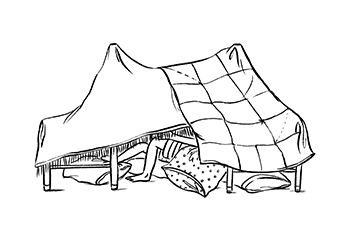
When children make a safe space, they use everyday objects to build cubbyhouses, forts or caves. These are often quiet, dim spaces with low stimulation.
Why is a make a safe space activity good for kids?
Making a safe space can be good for children at stressful times. This is because it can help them feel in control of their environment, and it lets them make a space where they feel calm. These spaces can be particularly good for children who are feeling overwhelmed or anxious or who are sensitive to changes in their environment.
What you need for a make a safe space activity
Everyday household objects work well for this activity. They include:
- material for the roof and walls – for example, clothes, towels, bedsheets or sleeping bags
- objects to make a frame for draping the material over – for example, chairs, tables, beds or doors
- pegs or clips to help with making the safe space – these are optional.
Your child might have to take down their safe space at the end of the day. That’s OK. They can re-build it the next day – or they might have a new idea for an even better safe space.
How to make a safe space
You can let your child lead this activity. Your child might enjoy making a safe space on their own or with others, including you.
How to get your child started
- Encourage your child to look for material for the roof and walls and objects to make the frame.
- Talk about the kind of space you’re making together. Is it a cave? Is it a rocket? Is it a mouse hole?
- Help your child drape the material over the frame and fix it in place with pegs or clips, if you’re using them.
- Encourage your child to fill the space with pillows and blankets to make it warm and cosy.
Ideas and options
Your child might like to use the safe space:
- on their own, to read, rest or do breathing exercises
- with 1-2 friends to play away from distractions or other people
- for quiet time with you.
Make sure the frame of your child’s safe space is sturdy enough to hold the material.
How to adapt a make a safe space activity for children with diverse abilities
Younger children or children with limited mobility might need you to help them build their safe space. Or they could lead the play by telling you what they want you to do.
Children with sensory sensitivities might prefer not to use particular types of materials. Just let them choose materials that they like.
Children with vision impairment might need you to help them find the items they want for their safe space. During construction, build slowly and let them lead wherever possible.
For children who are anxious or nervous, you could spend some time together inside the safe space until they feel comfortable on their own.
You can get more ideas for adapting this activity from our articles on play and autistic children and play and children with disability. You might also like to explore our other activity guides. They can all be adapted to suit children with diverse strengths and abilities.