
About rubella or German measles
Rubella or German measles is caused by rubella virus. This virus spreads when people touch or breathe in droplets from an infected person’s cough or sneeze. It can also spread through direct contact among people.
Rubella is very uncommon in Australia because most children are immunised against it. If rubella does occur, it’s most common in children under 13 years.
Symptoms of rubella
Symptoms usually start to appear 14-21 days after infection with rubella virus.
Early rubella symptoms look like the symptoms of a mild cold. They can include fever, sore throat and swollen lymph nodes in the neck.
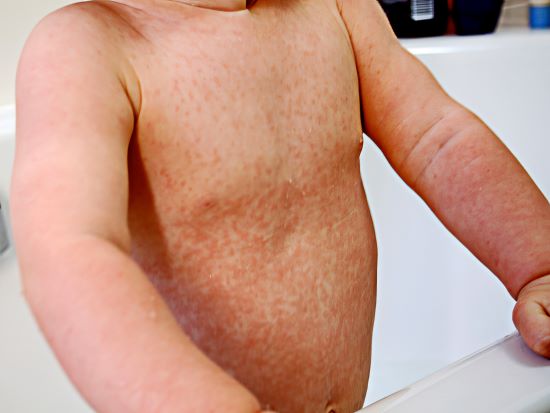
After 2-3 days, a rash appears, starting on the face and spreading to the chest, stomach and back. The rash has spots that:
- might look brown, grey or purple on dark skin or pink on light skin
- go back to the child’s usual skin colour when you press them
- gradually merge to form patches, which can be flat or bumpy.
The rash lasts 3-5 days before going away.
Children with rubella can spread the disease for 5 days before and at least 4 days after the rash appears. Children who have rubella shouldn’t go to child care, preschool or school until a GP says they’re no longer contagious. Children who have rubella must also stay away from pregnant women.
Medical help for children with rubella symptoms or contact with rubella
If you’re worried that your child has rubella, you should speak to your GP.
If you’re pregnant and think you’ve come into contact with rubella, talk to your midwife or doctor. If a pregnant woman gets rubella, it can cause congenital rubella syndrome in her unborn baby. Babies with congenital rubella syndrome might have problems with their hearing, vision and development.
You know your child best. If your child seems unwell, seek medical attention.
Rubella treatment
If your child has rubella, there are things you can do to ease your child’s symptoms:
- Give your child paracetamol or ibuprofen in recommended doses if they have a fever that’s making them feel uncomfortable.
- Encourage your child to drink plenty of water and get plenty of rest.
Don’t give aspirin to children under 12 years unless it’s prescribed by a doctor. Aspirin can increase the risk of Reye’s syndrome, a rare but potentially deadly condition. If you’re giving your child any over-the-counter medicines, check with your pharmacist or doctor to make sure these have no aspirin.
Rubella prevention
The best way to avoid rubella is to have your child immunised. As part of the Australian National Immunisation Program (NIP), your child gets 2 free rubella immunisations. Your child needs both doses for the immunisation to work.
Your child will get rubella immunisations at:
- 12 months, as part of the MMR vaccine, which protects your child from measles, mumps and rubella.
- 18 months, as part of the MMRV vaccine, which protects your child from measles, mumps, rubella and varicella (chickenpox).
Good hand-washing can help to stop rubella virus from spreading. It’s also important to cough or sneeze into a tissue or your elbow rather than into your hands and teach your child to do this too.