
About head lice and nits
Head lice are tiny, wingless insects that live in human hair and feed on blood in the scalp.
Nits are the eggs of head lice. Brown-black nits are eggs that haven’t hatched into lice yet. White nits are eggs that have already hatched.
Head lice can’t jump or fly, so they spread only when people are in close contact – for example, when heads are close together, when you wear an affected person’s hat or scarf, or when you use an affected person’s comb or hairbrush.
This means head lice spread very easily among household members and children at school and child care.
It’s very common for children to get head lice. Some children get head lice several times a year.
Head lice don’t carry any diseases.
Body lice and pubic lice are different from head lice. Body lice and pubic lice aren’t common in children.
Symptoms of head lice or nits
If your child has head lice, you might notice your child scratching, especially around the back of their neck and behind their ears. Scratching can make the scalp look scaly or cause crusty spots on the scalp.
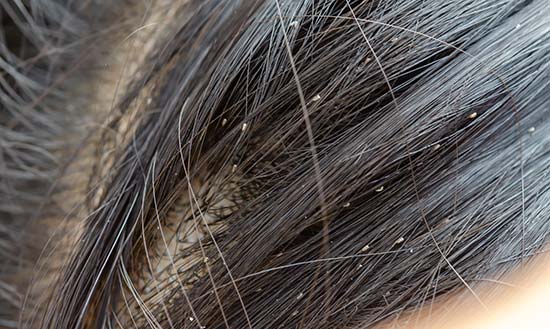
When you look closely at your child’s hair, you might see small, oval-shaped, white or brown-black nits attached to the root of the hair, near the scalp.
You might also see live head lice. Live head lice move fast. To spot live lice, you might have to part your child’s hair very quickly or use the wet-combing treatment described below.
Complications from head lice or nits
A bad case of head lice can lead to:
- itchy dermatitis on the scalp
- crusted sores, which can become infected by bacteria
- enlarged lymph nodes in the neck.
These symptoms aren’t common, and your child can avoid them if you treat their head lice as soon as possible.
Medical help: when to get it for children with head lice or nits
You should see your GP if you’ve tried the treatments below and they’re not working.
You should also see your GP if your child:
- is scratching a lot and it interrupts their sleep
- has sores on their scalp
- has been treated 3 or more times in a year.
Treatments for head lice: anti-lice products and wet-combing
There are 2 ways to treat head lice at home – anti-lice hair products and wet-combing.
Anti-lice products
You can get anti-lice products from your pharmacy without a prescription. Lotions, liquids and creams are more effective than shampoos.
These products can be unpleasant for your child because of their strong smell and because they sometimes irritate the skin on the scalp. It’s important to follow the instructions carefully.
It’s important to check that the lice are dead after using an anti-lice product. If they aren’t dead, try using a product with a different active ingredient, because lice are sometimes resistant to active ingredients. The active ingredients in these products include permethrin, maldison or pyrethrin. Ask your pharmacist if you’re not sure which product to try.
You’ll need to treat your child again about one week after the first lice treatment, to kill any eggs that have hatched and become mature lice since the first treatment.
Wet-combing treatment
This head lice treatment involves combing wet hair with a special fine-toothed, metal lice comb and hair conditioner. You can buy these combs from your pharmacy, and any type of conditioner will do.
Here’s what to do:
- Apply a lot of conditioner to your child’s wet hair. Rub it into the scalp and along the hair shafts.
- Leave the conditioner on for at least 15 minutes. You can put a shower cap over your child’s head while you’re waiting. The conditioner and cap suffocate the lice, and they release their claws from the hair shaft or scalp.
- Use the lice comb to remove the conditioner from your child’s hair. Insert the comb until it gently touches the scalp and then firmly comb out from the scalp. Clean the comb between strokes with a paper towel and/or tap water. You’ll often be able to see how many lice you’ve combed out of your child’s hair.
- Comb your child’s entire head thoroughly at least twice.
Repeated wet-combing is a very good head lice treatment. Comb every 2-3 days for 2 weeks, until a full combing doesn’t show any eggs or lice on the entire scalp.
Wet-combing takes time, often more than 30 minutes. You can distract your child by talking about their day, or letting your child read a book, play games on a phone or tablet, or watch TV while you comb.
If your child has head lice, you should treat all family members at the same time.
Treatment for repeated cases of head lice
It can be very hard to get rid of head lice. Treatment doesn’t always work, especially the first time you do it.
Some children get head lice several times each year. This can be very upsetting for your child and for you.
If your child has been treated for head lice more than 3 times in a year, it’s a good idea to talk to your GP about other treatments.
Children who keep getting head lice can be prescribed a tablet medication called ivermectin, which is very good at killing lice.
Prevention of head lice
The best way to stop your child from getting head lice is to stop them from sharing brushes or hats with other children.
Your child is unlikely to get head lice from things like furniture, pillows and carpet. But if someone in your family has head lice, you could consider washing any combs, brushes, clothes, hats or bedding the person has used in the last 48 hours. Use a hot wash cycle and dry things in a hot dryer.
Small items that can’t be washed can be sealed in a plastic bag for several days to kill head lice.
Let your child’s child care service, preschool or school know that your child has lice. Keep your child at home until the day after you’ve treated them.