
About eczema
Eczema is a common condition that causes inflamed, scaly patches on the skin. It can make the skin very itchy and uncomfortable.
Eczema usually starts in the first few months of life. Many children grow out of eczema by adolescence, but some people have eczema all their lives.
Eczema isn’t contagious.
Children with eczema often have other allergy-type conditions like asthma or hay fever, or they have family members with these conditions.
Eczema is also called atopic dermatitis.
Eczema triggers
Eczema often comes and goes. There are several triggers that might cause an eczema flare-up:
- contact with irritating chemicals like soaps or bubble baths
- contact with irritating fabrics like coarse-fibred wool and polyester
- exposure to allergens like dust mites or animal fur
- overheating with clothing, blankets or heaters
- food allergies or food intolerances
- viral or bacterial infections
- stress.
Sometimes there’s no obvious cause for a flare-up.
If your child has eczema, it’s a good idea to keep a diary of your child’s eczema flare-ups and what’s going on when they happen – for example, where your child is, what they’re wearing, what they’re doing and so on. Or you could use The Royal Children’s Hospital’s eczema questionnaire. This can help you identify the triggers for your child’s flare-ups, so your child can avoid them in future.
Eczema symptoms
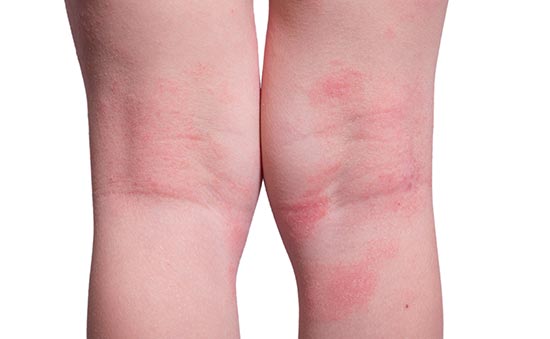
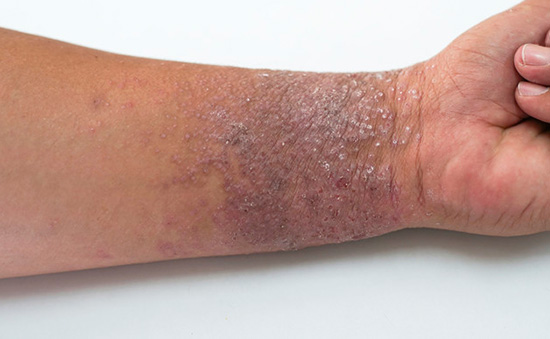
Children with eczema have very itchy, scaly, bumpy, inflamed patches of skin. On children with light skin, the inflamed patches might look red. On children with dark skin, the patches might look brown, purple or grey.
If small eczema patches aren’t treated quickly and properly, the rest of the skin can become inflamed and patches can spread.
Eczema patches can also weep, develop cracks and even bleed, especially if scratched. Bacteria and viruses can get into the skin through these cracks, which causes infections. This leads to light-brown or yellow crusts, blisters or pain. If the infections are severe, your child might have fever, headache and tiredness.
If eczema isn’t treated properly, the skin might look thickened and dry. When eczema is properly treated, the skin usually goes back to normal with no scarring.
Medical help: when to get it for children with eczema
Take your child to see your GP if your child:
- might have eczema for the first time
- is very itchy and uncomfortable
- has eczema that’s weeping or bleeding
- has eczema that hasn’t improved much after a few days, even though you’ve been treating it as usual
- is having trouble sleeping because the rash is so itchy
- has painful eczema or eczema that has developed pus
- has eczema and is generally unwell – for example, has a fever or is sweating, is feeding poorly or is tired.
You should also take your child to the GP if you’re not sure whether the rash is eczema.
If your child’s eczema doesn’t improve with a combination of medical treatment and management at home, your GP might refer your child to a dermatologist. If the GP thinks your child’s eczema might be from allergies, they might also refer your child to an allergy and immunology specialist.
Medical treatment for eczema
Eczema can’t be cured. But it can be managed by preventing and treating flare-ups as soon as they appear. Careful management can help children avoid eczema most of the time.
If your child’s skin is inflamed and itchy, they’ll probably need corticosteroid ointment or cream. For mild eczema, you can buy mild corticosteroids over the counter at your pharmacy. The most common is hydrocortisone 1% cream. For more serious eczema or if the over-the-counter products aren’t working, you’ll need to see your GP to get a prescription for a stronger corticosteroid.
Other eczema treatments include pimecrolimus, a non-steroidal cream. Doctors might prescribe this cream for children with mild to moderate eczema on the face and in body folds.
If your child is scratching at a rash, you could ask your pharmacist or GP about using an antihistamine medicine for a few days. Together with a corticosteroid cream, this might give your child some rest and help the flare-up to settle.
If your child’s eczema rash gets infected, your doctor will prescribe a course of oral antibiotics.
At-home treatment for eczema
Avoid things that irritate the skin
Common things that can irritate your child’s skin include:
- dummies, dribbling and acidic foods
- prickly, irritating materials in bedding, clothing or car seats
- soaps, bubble bath, detergents, alcohol wipes and baby wipes containing fragrance or an ingredient called methylisothiazolinone
- allergens in the environment like pets, grasses, dust mites and pollen.
Use a moisturiser regularly
Regularly use a thick, plain moisturiser without any fragrances – twice a day is ideal. The best time to use a moisturiser is straight after a bath or shower, because it will sink into the skin better.
Ointments often work better for very dry skin because they’re greasier than cream.
Your child could also use a simple, fragrance-free, moisturising bath oil in their bath.
Have short, warm baths and showers
Make sure your child’s baths or showers are short, with warm but not hot water.
Also, your child doesn’t need to have a bath or shower more than once a day. For your baby or toddler, you could wash their face and bottom rather than giving them a full bath.
Keep your child cool
- Avoid having heaters on too high.
- Keep your child away from direct sources of heat, like heaters and fireplaces.
- Avoid dressing your child in too many layers or having too many layers on their bed.
- Dress your child in cotton underwear and clothes, rather than coarse-fibred wool and polyester.
Reduce itch
- Apply a cool towel or face washer to itchy areas.
- Use wet dressings over the top of creams and ointments to soothe your child’s skin during flare-ups.
- Use a mineral salt spray – you can find this at pharmacies.
Manage scratching
- Distract your child when they’re bothered by the itch. Try talking, playing, reading or watching a movie together.
- Keep your child’s fingernails short and clean.
- Use cotton mittens or a baby suit that covers your baby’s hands.
Moisturise before and after swimming
Your child can swim in chlorinated water, but you should apply moisturiser all over before swimming. After swimming, wash the skin in a cool shower or bath and apply more moisturiser.
Salt water might improve eczema.
If your child uses moisturisers and prescription ointments, take them with you when you’re out. Put them on your child as soon as they start to scratch. You can also ask anyone who cares for your child to put the treatments on your child if you’re not around.