
Children’s teeth development
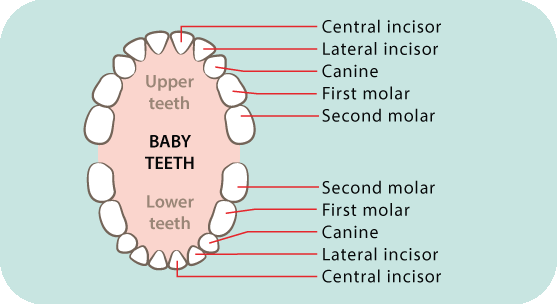
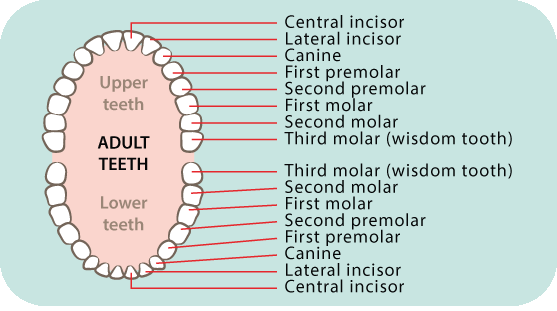
Children usually start losing their baby teeth from around 6 years of age. From 6-12 years, children have a mixture of adult and baby teeth. By about 12 years, most children have all their adult teeth except for the third molars (wisdom teeth). There are 32 adult teeth.
If your child’s baby teeth came late, the adult teeth will probably be late too. If you’re concerned about your child’s teeth development, see your dentist.
When adult teeth are coming through
Your child might find chewing is more difficult when their baby teeth are loose or missing, but your child still needs to eat healthy foods.
It’s important to keep up your child’s teeth-brushing routine, taking extra care around the loose teeth or sensitive areas.
Sometimes an adult tooth will come through before the baby tooth has fallen out. If the baby tooth hasn’t fallen out within 2-3 months, see your dentist.
How to take care of children’s teeth at 5-8 years
Brush your child’s teeth twice a day – morning and night.
Use a pea-sized amount of regular adult fluoride toothpaste.
By the time your child reaches school, they might be starting to clean their own teeth. It’s still a good idea for you to either start or finish the cleaning process. Your child needs your supervision and help until they’re at least 8 years old.
If your child’s teeth sit tightly against each other, you can start to use waxed dental floss to clean between your child’s teeth once a day.
You can also encourage your child to rinse their mouth with water after lunch and snacks. This will help to wash away any leftover food.
Losing baby teeth can be an exciting but anxious time. You can help your child feel better about it by celebrating each time a baby tooth falls out.
How to brush children’s teeth properly
You might like to try the following routine when brushing your child’s teeth:
- Stand or sit behind your child so your child feels secure. Brushing teeth in front of a mirror is good too, because it lets you see your child’s mouth.
- Cup your child’s chin in your hands with their head resting against your body.
- Angle the bristles of the toothbrush towards the gum. If you’re using a manual toothbrush, move the brush in small, gentle circles. If you’re using an electric toothbrush, move the brush gently across the teeth, spending a few seconds on each tooth.
- Brush the outer and inner sides of the teeth and along the gumline. Brush along the chewing surfaces of the teeth.
- Gently brush your child’s tongue.
- Brush for around 2 minutes.
- After brushing, encourage your child to spit out toothpaste, not swallow it. There’s no need to rinse after brushing because the fluoride toothpaste left behind protects your child’s teeth.
Diet is an important part of preventing tooth decay. Give your child healthy, low-sugar foods and drinks, and help your child to develop healthy eating habits.
How to choose children’s toothbrushes and keep them clean
Choosing a toothbrush
When you and your child are choosing a toothbrush, you can look for the following:
- Soft bristles – these won’t damage your child’s gums or the surfaces of your child’s teeth.
- A long handle – this will help your child reach all their teeth.
- A small head – this will make it easy for your child to move the toothbrush around their mouth, one tooth at a time.
Electric and manual toothbrushes are equally good if you use them properly to clean all the surfaces of all your child’s teeth. If you’re deciding between a manual and an electric toothbrush, it’s OK to let your child choose.
Keeping the toothbrush clean
You can remind your child to rinse the toothbrush with tap water after cleaning teeth and gums. And your child should store the toothbrush upright in an open container to allow it to air-dry.
It’s a good idea to change your child’s toothbrush every 3-4 months or when the bristles get worn or frayed.
Fluoride and dental health
Fluoride is a mineral that keeps teeth strong and prevents tooth decay. Fluoride is safe and works best when your child gets it in very small amounts throughout the day from the following sources:
- Toothpaste – your child can use regular adult fluoride toothpaste once they turn 6.
- Tap water – most tap water in Australia has added fluoride.
For children who are at high risk of developing tooth decay, dentists might also prescribe gels and pastes with extra fluoride.
Dental sealants
At this age, your dentist might recommend dental sealants for your child.
Dental sealants are thin, plastic coatings that stick to the chewing surfaces of teeth. These sealants stop plaque build-up in the grooves of teeth, which helps to stop tooth decay. Applying the sealants is usually simple and quick, with no pain and very little discomfort for your child.
Sealants don’t stay on your child’s teeth forever. Your dentist will check them regularly. They might sometimes need fixing or replacing.
If you’re interested in dental sealants for your child, speak to your dentist.
Visiting the dentist: a key part of dental care for children
At this age, your child should visit the dentist regularly, even if you think your child’s teeth are healthy. Talk to your dentist about how often your child needs a check-up. Dentists usually recommend every 6-12 months.
Depending on your child’s needs, your child might also see other dental health professionals like dental therapists, dental hygienists, oral health therapists, paediatric dentists or orthodontists.
Dental care for children in Australia
In Australia, children can get dental care in the public system or private system.
The public dental health system provides basic dental care, which is often free or subsidised.
The private dental health system provides both basic and specialist dental care. This usually costs money. Private health insurance and other schemes might partly cover the cost of private dental care.
If you’re eligible, the Australian Government’s Child Dental Benefits Schedule covers basic dental care for children aged 0-17 years at most private and public dental services.
You can visit your state or territory health department website or Teeth.org.au – Government dental care to find out about public dental services near you. You can also search online to find private dental services near you.