
About cradle cap
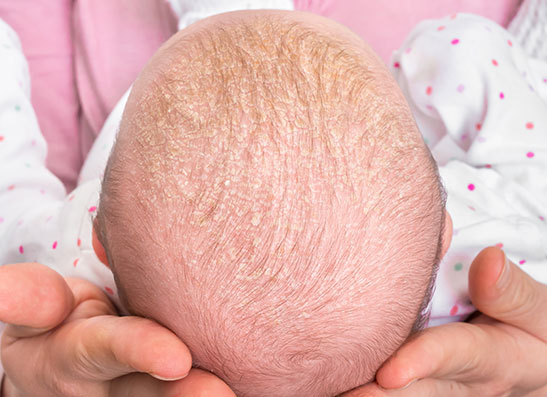
Cradle cap is the oily, yellow, scaly crusts babies often get on their scalp and sometimes in their body folds.
Cradle cap happens when there’s too much oil (sebum) in your baby’s skin. This is probably because their birthing mother’s hormones are still circulating in their blood after birth. This extra oil interferes with the natural shedding of skin on your baby’s scalp, which leads to a build-up of dead skin over the scalp.
Cradle cap might also happen if your baby’s immune system overreacts to the presence of yeast on their scalp. This overreaction causes inflammation.
Cradle cap isn’t contagious, dangerous or serious.
Your baby’s hair might get a bit matted because of cradle cap, but this condition won’t cause baldness or long-term hair loss.
Cradle cap mainly affects young babies. When it affects children, teenagers and adults, it’s called seborrheic dermatitis.
Symptoms of cradle cap
Cradle cap usually looks like a pale yellow, oily or waxy scale or crust at the back or on the top of your baby’s head. Sometimes the scale can spread to your baby’s eyebrows and behind their ears. Some babies even get it in their body folds – for example, in the groin, on the neck, in elbow creases or behind the knees.
The scale or crust is difficult to peel off. Underneath the scale or crust, you might notice inflamed or irritated skin. On children with light skin, the inflammation might look red. On children with dark skin, the inflammation might look brown, purple or grey, or the skin might appear lighter than usual.
Cradle cap won’t bother your baby because it isn’t itchy or painful.
If the rash is itchy and doesn’t go away, it might be eczema.
Medical help: when to get it for children with cradle cap
You should take your baby to see the GP for the following reasons:
- The cradle cap doesn’t improve after 2 weeks with the treatment described below.
- The skin underneath or around the crust is inflamed or weeping.
- Your baby has a spreading rash in the affected areas.
- Your baby seems to be irritated by the cradle cap or is scratching it.
You should also take your baby to the GP if you’re not sure whether it’s cradle cap, or your baby has signs of an infection, including fever, tiredness or poor feeding.
Cradle cap treatment
Cradle cap doesn’t need to be treated. It usually clears by itself within a few months after birth.
If you want to get rid of the crusts, regularly massage fragrance-free, non-irritating moisturiser, bath oil or petroleum jelly like Vaseline into the crusts before bathing your baby. You can also add a bath oil to your baby’s bath. Use mild baby shampoo to wash this out. Over time, the crusts will soften and should lift off easily if you brush over them with a cotton bud or soft baby toothbrush.
Don’t force the crusts, because this might make your baby’s skin bleed.
If the crusts are inflamed, your GP might prescribe a combination mild corticosteroid and anti-yeast cream – for example, Hydrozole cream. Put the cream on your baby according to your GP’s instructions and the instructions on the tube or packet.
Sometimes, your GP or child and family health nurse might recommend an over-the-counter anti-dandruff shampoo. This can irritate your baby’s skin and eyes, so you should dilute it in water if you do use it. And you should use it on your baby for no more than 2 weeks.
Don’t be worried if the cradle cap comes back after treatment. This just means that your baby’s glands are still making extra oil. The cradle cap should clear by 6-12 months.